
A Voice at the Table
Ownership at Mother Duck is about more than owning a business.
It also means having a voice in the future of the organisation — and accepting responsibility for the decisions we make together.
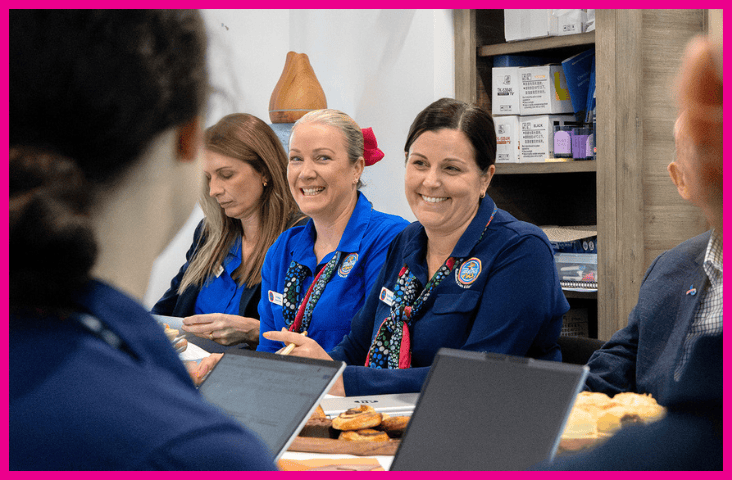
Each month, our Management Committee brings our Mother Duck services together to consider the issues, opportunities and decisions affecting our network.
Each service has a voice.
That is intentional.
Our Franchisees bring deep knowledge of their own services. They know their children, families, educators and communities. They understand what is happening in the everyday life of their service and bring that experience to the table.
When those insights are shared across our network, we can learn from one another, identify emerging needs and make better-informed decisions for Mother Duck as a whole.
But there is something even more important that guides those conversations.

Children come first.
The National Law requires the safety, rights and best interests of children to be the paramount consideration in the operation and delivery of education and care. In other words, these considerations must come before all others.
For us, this provides a simple but powerful litmus test for decision-making:
Does this decision place the safety, rights and best interests of children first?
Whether we are discussing staffing, professional learning, environments, policies, resources, budgets or the future direction of Mother Duck, that question brings us back to our shared purpose.
It reminds us that good governance is not simply about making sound business decisions.
It is about making decisions through the lens of children.
ACECQA encourages approved providers and governance bodies to be able to demonstrate how the paramount consideration is embedded in decision-making and quality improvement, including operational and financial decisions.
Child safety – Understanding paramount consideration.pdf
This is why having experienced early childhood professionals around the table matters.
Our Franchisees understand the impact organisational decisions can have on the everyday experiences of children. Their professional knowledge, local understanding and direct connection to their communities help keep those experiences visible when decisions are made.

They are not simply recipients of organisational decisions.
They help shape them.
For us, this is an important part of what being proudly independent and proudly local means.
It is about local owners having a genuine voice, sharing responsibility for the organisation they belong to, and remaining connected to the children and communities our decisions ultimately affect.
And regardless of the issue before us, we return to the same question:
Are we putting children first?
Every day, every child, every educator, every time.
This Is Our Story & Why It Matters
Across Australia, small and medium-sized early learning centres have always been there. Independent-operators opened their doors because they care about children, about educators, and about the neighbourhoods they serve.
Today, 79% of government-approved early learning service providers operate just a single service. Many of these are small businesses. Real people. Real commitment.
Independent, locally-owned early learning services play a vital role in Australia’s early childhood education and care sector. They support children and families, employ local educators and contribute to the social and economic fabric of the communities they operate in.
Many have spent years – and in some cases generations – building trusted relationships with families, educators and local communities. They are deeply embedded in their neighbourhoods, connected with local schools and businesses, and understand the children, families and communities around them.
Yet too often, policy and funding frameworks treat independently operated centres as part of a homogenised sector.
The difference matters. Local centres operate differently. They think differently. And care differently.
Proudly Independent, Proudly Local is a campaign to change the conversation. We want policymakers, media, and families to understand what makes locally-owned providers special, and why they deserve to be seen, valued and protected.
Because when a local early learning centre closes, it’s not just a business lost. It’s a piece of the community gone.

